

Professor Anastasios Tamis has spent a career documenting the Greek diaspora from Melbourne. His warning this week is plain: “The diaspora cannot survive on commemorations alone.”
He is not arguing that national celebrations, official visits or an Evzone contingent have no value. They do. They remind us that Greece remembers us. But remembrance is not the same as a relationship.
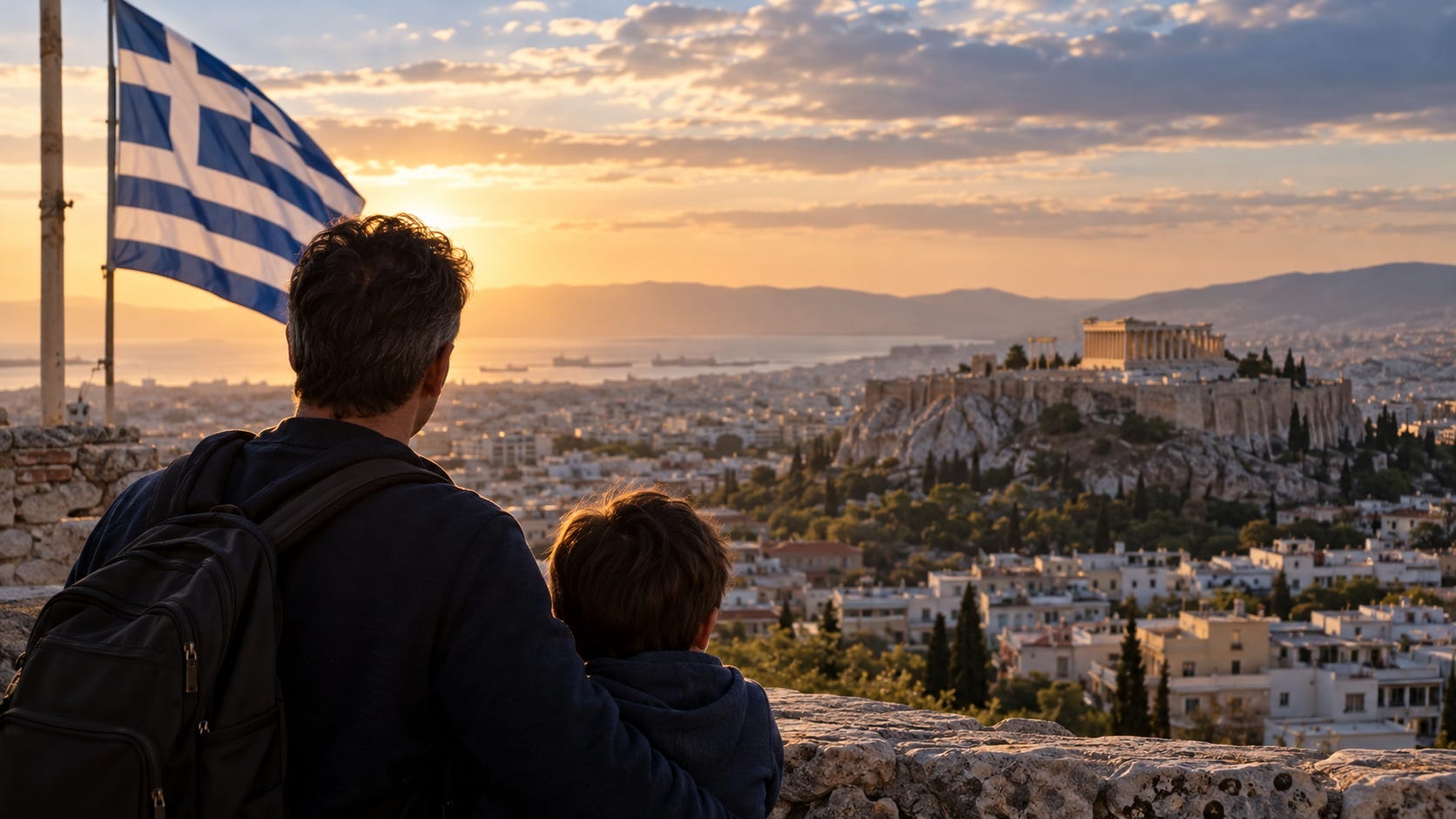
One of the first things I did after returning to Australia a couple of weeks ago was register to vote in the next Greek election. I spend a substantial part of each year in Greece, own an apartment there and pay property taxes and utility bills. The connection is not abstract to me. It is family, language, place and an ordinary part of my life.
Yet, as The Greek Herald reported on 7 October, only about 220 people in Australia had registered to vote from abroad at that point. The Deputy Foreign Minister, Yiannis Loverdos, was right to say the process is still early and that better information is needed. The number is not a verdict on Greek Australians. It is, however, a question worth taking seriously.
Why is the connection so often strong in feeling but weak in participation?
Part of the answer is that the work of maintaining a diaspora has always been local. In Australia it has been done by families, volunteers, schools, clubs, churches and people who give up evenings and weekends because somebody has to keep the language and the institutions alive.
Tamis’s point is that Athens cannot assume this will go on forever without practical support. He cites a steep decline in educational advisers and teachers seconded from Greece, reduced textbook support and the loss of programs that helped train educators working with diaspora communities. The detail matters, because language is not maintained by goodwill alone. It needs teachers, material, places to learn and institutions that can plan beyond the next celebration.
This does not mean diaspora communities should wait passively for Greece to rescue them. Tamis is clear about that too. Communities abroad have their own resources, organisations and responsibilities. The relationship should be reciprocal, not a one-sided request for money from Athens.
But reciprocity has to be visible.
What does a diaspora reasonably ask of the homeland? Not that Greece run every Saturday school in Melbourne. Not that it solve every local problem. It asks for reliable voting information and access; a consular system that helps rather than exhausts people; teachers and modern educational resources where they make a difference; and institutions that treat Greeks abroad as a constituency to be understood, not a ceremonial audience to be visited.
There is one modest test of that commitment. Greece could work with Australian universities and community institutions to support serious Greek-language tertiary courses, teacher development and modern digital learning. I do not pretend to know the precise budget. But the question is not whether Athens can finance every cultural ambition abroad. It is whether it can make a few sustained investments that show younger generations that the language is more than an inherited obligation.
Those investments would not merely preserve sentiment. They would strengthen the practical ties that make people more likely to vote, study, visit, invest, work and remain engaged with Greece over a lifetime.
The diaspora has done its share: schools, clubs, language and the patient work of families. Greece does not need to do everything. But it does need to show, in practical and continuing ways, that the connection runs both ways.
Sources
Neos Kosmos: Professor Anastasios Tamis warns Greece is losing touch with its diaspora
The Greek Herald: Loverdos urges Greek Australians to register as Greece prepares for postal voting