

I value my privacy. I like my quiet mornings, my zones, the invisible boundaries that separate my property from the neighbours’. But when I look honestly at the floor plan of my life, I’m living in a fortress built on a foundation of amnesia. We have more square footage than any previous generation. We are also, quietly, starving for the thing that kept my family alive in the suburbs of Melbourne: the beautiful, chaotic, and occasionally suffocating absence of personal space.
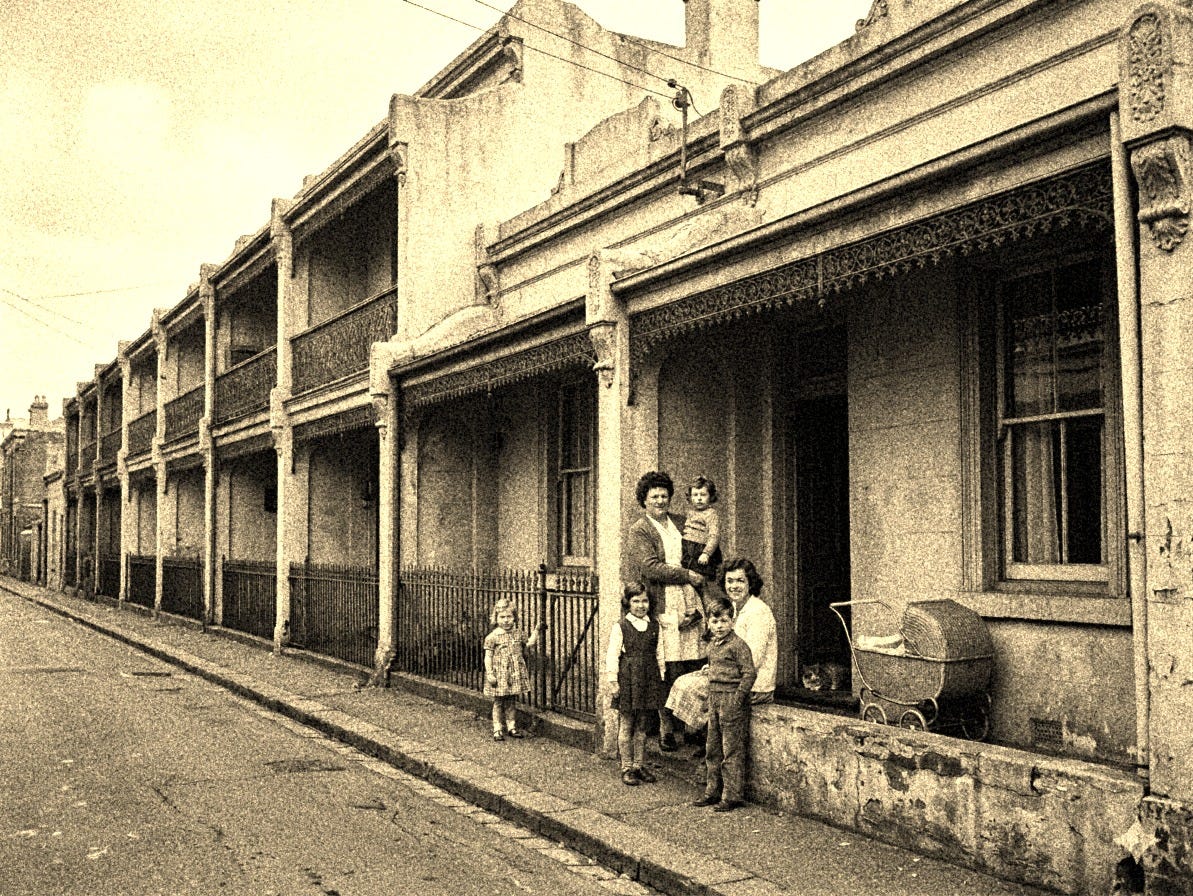
My parents didn’t bring a life with them from Greece. They met in the suburbs of 1950s Melbourne and decided to build one from scratch. My father was a man of the factory floor; my mother, a woman of the needle and thread. They had arrived in Australia separately, with nothing but the kind of stubborn resilience that a village upbringing in Greece either forges or breaks. When they finally scraped together enough to buy their first home in Bank St, South Melbourne — then a low-price, worker’s suburb, not the trendy, up-market suburb it is today — they didn’t celebrate by spreading out. They celebrated by squeezing in.
I spent my childhood in a house where my parents, my sister, and I shared a single bedroom, while the rest of the house was a revolving door of new arrivals – young men, women, and families who had stepped off a boat with a cardboard suitcase and a look of profound displacement. Rent wasn’t a monthly transaction. You didn’t pay a cent until you found a job, and you didn’t leave until you’d saved enough to buy a front door of your own.
The air in our shared kitchen was thick with roasted lamb, Greek tobacco, and the collective anxiety of people trying to learn a new syntax for home. By modern council codes, the arrangements would probably be condemned. In practice, it was the most efficient social safety net ever designed. My parents understood something my generation has largely forgotten: a house isn’t a private sanctuary or a diversified asset. It’s a lifeboat. And in a lifeboat, you don’t complain about the lack of legroom. You keep pulling people out of the water.
My parents didn’t have degrees in sociology. But they understood that you don’t subtract from your life by adding someone else to your dinner table.
The rhythm of that house was the hum of my mother’s sewing machine. My father’s hands were stained with factory grease; my mother’s back was permanently shaped by hours bent over her work. They were workers in the most literal sense – trading their physical stamina for a foothold in a country that didn’t always know what to do with them. But their labour didn’t end when they clocked off. The second shift began at the kitchen table.
This was where the unwritten contract of the Greek community was signed. They helped the newcomers navigate the terrifying bureaucracy of a new country, translated documents they barely understood themselves, walked people into the factory and vouched for them by name. They weren’t just providing a bed. They were providing a bridge.
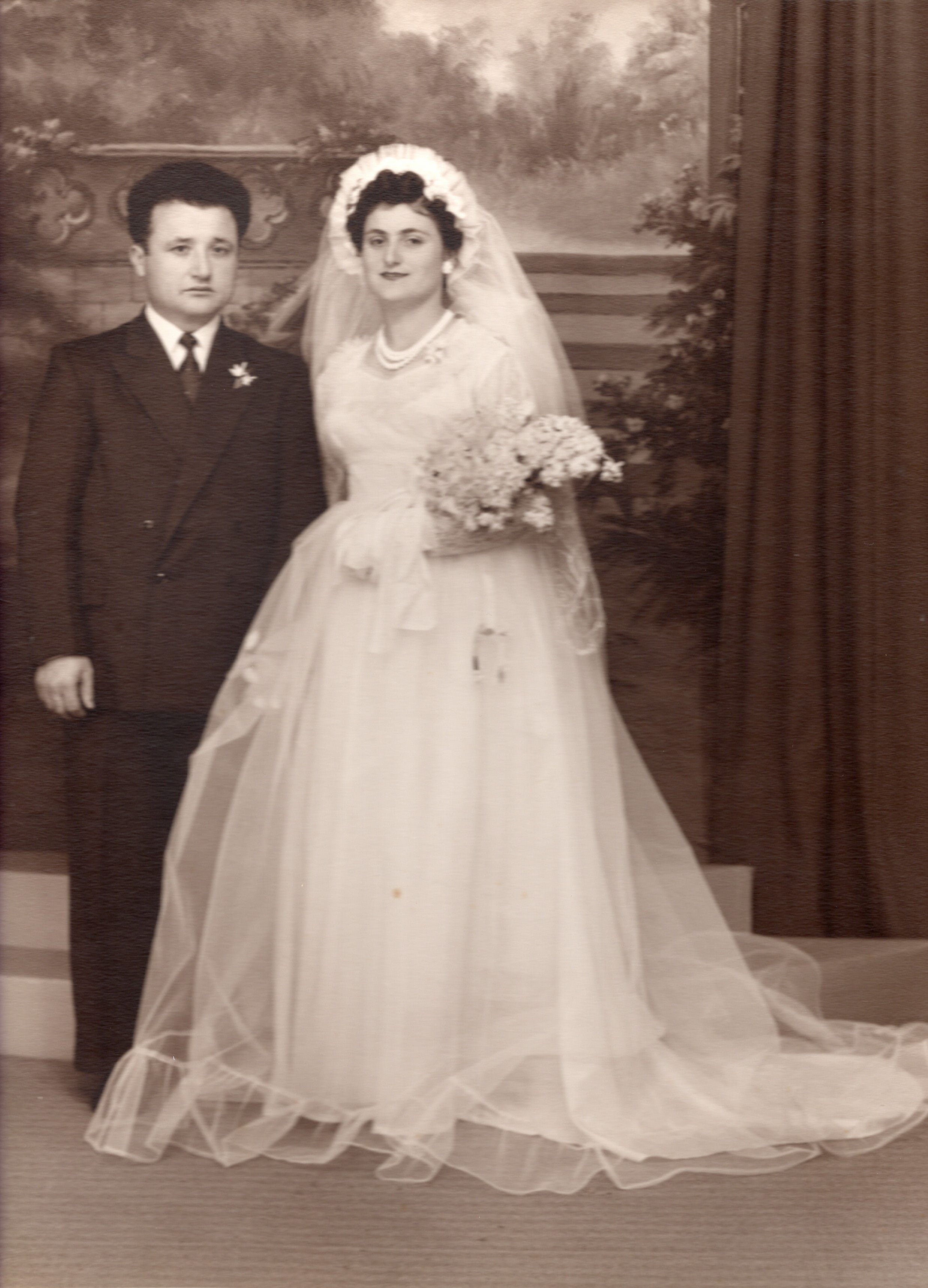
Some of those strangers who occupied the back rooms of our house never really left our lives. They became the fabric of our family – there for the christenings, the funerals, and dancing the most enthusiastically at my wedding. The guest list that day wasn’t just a collection of relatives. It was a map of my parents’ generosity. Several of the people there had spent their first night in Australia on a makeshift bed in our dining room.
My parents didn’t have degrees in sociology. But they understood what I think of as ancestral mathematics: you don’t subtract from your life by adding someone else to your dinner table. You multiply your security. True resilience is communal. If the factory closed or the sewing commissions dried up, their house wouldn’t fall – because it was held up by the dozens of people they had once sheltered.
I look at the way we live now – the clean, quiet streets, the high fences, the video doorbell that lets me check whether I can afford to ignore whoever is knocking – and I see clearly what we bought with our success.
We bought silence.
We’ve outsourced our safety nets to insurance companies and superannuation funds. We have apps for delivery so we don’t have to talk to shopkeepers. We’ve learned to call “not wanting to help” by the more comfortable name of “setting boundaries.” We treat the house as a box that accrues value while we sit inside it, scrolling. My parents treated it as a machine for producing successful citizens.
I’m not suggesting we go back to four families sharing one bathroom. We’ve earned our bedrooms and our privacy, and I for one intend to keep them. But I think we need to remember the spirit of that shared kitchen. The most valuable thing you can do with a spare room – whether it’s physical, financial, or simply a pocket of time you’ve kept for yourself – is to put someone in it until they can stand on their own two feet.
My parents arrived with nothing. They left a legacy of full rooms.
I hope my generation doesn’t end up with everything, only to realise we’re the only ones in the house.