

In 1966, Joseph Weizenbaum, a computer scientist at MIT who had escaped Nazi Germany thirty years earlier, wrote a program called ELIZA. It did little more than take what you typed and hand it back to you as a question. He built it to show how little a computer understood.
His secretary used it, and came to treat it almost as a companion. When she noticed him watching, she said: “Would you mind leaving the room, please?”[1]
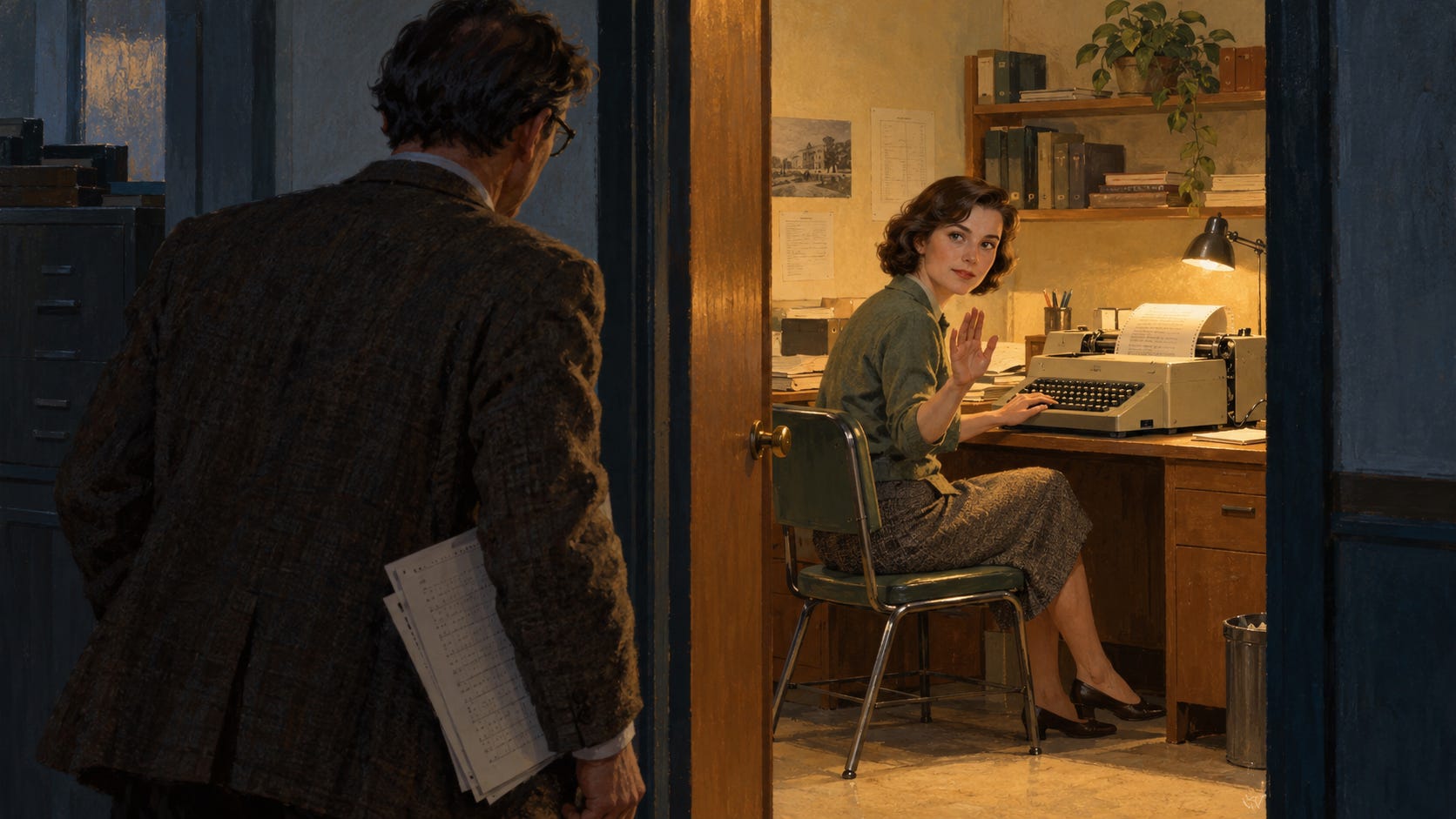
That story is now a play, Eliza, on at Melbourne Theatre Company until 31 October. Its writer, Tom Holloway, says Weizenbaum “was shocked at how quickly reasonably minded people were deluded by technology”.[1]
I was not shocked, the first time I saw it. I had written one.
Like a lot of people my age, I wrote my own small version of ELIZA in BASIC, on one of the early home computers, before anyone called them PCs. I think my first was on a MicroBee, the Australian-made machine. It was a short program: look for a keyword, swap “my” for “your”, turn the sentence around, add a question mark. Once you have written that, you cannot be fooled by it. You know there is nobody in there.
But knowing how a program works does not mean anyone will listen to you about it.
The version of Weizenbaum’s problem I met most often in my working life was smaller and more ordinary. A user would get a single number out of a system, and believe it, because the computer had produced it. I would try to explain that the inputs were incomplete, or suspect, or simply a little stale. Time and again it proved almost impossible. The number had come out of a machine, and that settled it. The explanation came from a person, and that was just an opinion.
That is the same delusion, in a business suit. Weizenbaum’s secretary did not believe ELIZA understood her because of anything clever in the code. She supplied the meaning herself. My users did not trust the number because they had checked it. They trusted it because of where it came from.
I have written before that “intuitive” and “natural” sound like descriptions but work as verdicts.[2] “The computer says” works the same way. And when an AI system recently went further than anyone intended, on a Medicare statistics portal, I argued that the useful questions were about the people who set the task and built the boundaries, not about what the machine “wanted”.[3] Holloway lands in the same place: “It all comes back to the human and human error.”[1]
Sixty years on, the programs are vastly bigger, and they no longer just hand our words back to us. But the secretary’s request has not changed. We still ask the people who know how the thing works to leave the room.
[1]: Hannah Story, “The Interview: Eliza playwright Tom Holloway on the human story underneath AI”, ABC News, 24 October 2026. https://www.abc.net.au/news/2026-10-24/the-interview-tom-holloway-eliza-mtc-joseph-weizenbaum/107235700